The Garmin Approach R10 is the budget radar launch monitor I keep as my reference point, and after running it against a photometric unit on the same swings all winter, my honest verdict is this: it nails ball speed and gives a usable carry when you set it up right, but several of its headline numbers are calculated, not measured, and it punishes a sloppy setup harder than any other unit in its class. Knowing exactly where its edges are is what turns the R10 from a frustrating gadget into a genuinely useful practice tool.
This is not a teardown and it is not a brochure. It is what I learned living with the unit — where its data is trustworthy, where it quietly invents numbers, the read distance it demands, and the kind of practice it is actually good for. If you are deciding whether the R10 is the right budget buy, start here, then size it against the alternatives in my budget launch monitor guide.
What the R10 Genuinely Does Well
Ball speed is the R10’s anchor, and it earns its trust there. It is a Doppler radar unit, and ball speed is the quantity radar captures most directly, so the number that the rest of the flight model leans on is the number you can rely on. In my room, ball speed tracked sensibly across clubs and matched what my photometric unit reported closely enough that I stopped second-guessing it. If ball speed is solid, then the derived carry — provided you give the unit the conditions it needs — comes out usable too.
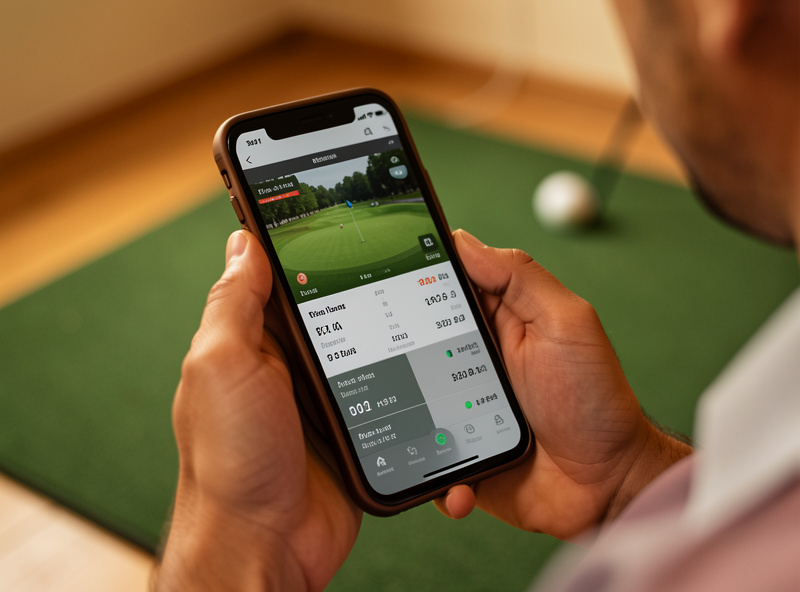
The second genuine strength is the ecosystem for the money. The phone app, the practice modes, the ability to play virtual rounds through the companion software, and the sheer convenience of a unit that fits in a jacket pocket make the R10 punch above its price as a practice companion. For a first sim, that matters: the unit you actually use beats the more accurate unit that sits in a closet because it is a hassle. The R10 is the opposite of a hassle once it is dialed in, and that is a real part of its value.
It is also forgiving about where you use it. As a radar unit it tolerates varied lighting and works indoors or out, so you can take it to the range in summer and back to the sim in winter without re-learning it. That dual life is genuinely useful and is one of the reasons it stays my budget-radar reference rather than a unit I bought, tested, and shelved.
There is a quieter strength worth naming too: the R10 makes a great practice habit machine. Because it is quick to set up and the app keeps a running record, it lowers the friction of logging a session, and through a long Swedish winter the unit you reach for without thinking is the one that actually improves your gapping. I have owned more accurate instruments that I used less, simply because they asked more of me before the first ball. The R10’s combination of pocket-size convenience and a record-keeping app is exactly the kind of thing a spec sheet undersells and a winter of use reveals.
Where the Numbers Are Calculated, Not Measured
Here is the honesty the marketing skips: the R10 is a model-heavy unit. Spin in particular is, for most shots, derived rather than directly measured, and on mishits and off-center strikes — exactly when you most want the truth — the spin number can wander well away from reality. I treat R10 spin as a trend indicator, never as a value to chase to the RPM. If you start re-gripping and re-teeing to move a spin number the unit is modeling, you are tuning to a guess.
The club-data fields deserve the same skepticism. Club path, face angle, and the rest are not what a radar unit at this price measures cleanly, and I would not make swing changes on the strength of R10 club numbers alone. Where the R10 shines is ball data and the relative picture: gap your clubs with it, watch your dispersion tighten or loosen session to session, and use it to build feedback loops around what the ball does. The moment you ask it for measured club delivery, you are outside its envelope — which is the dividing line between budget radar and the pricier units I map out in the budget launch monitor guide.
The Setup Discipline It Demands
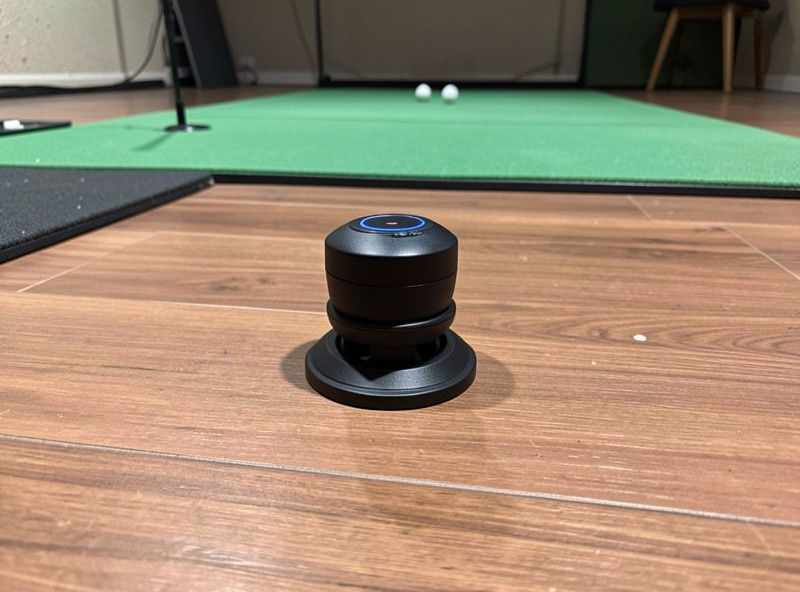
More “the R10 is inaccurate” complaints trace to setup than to the hardware. As a behind-ball radar unit it needs a clean read corridor: place it the manufacturer-specified distance behind the ball, square to the target line, with nothing in the read path to throw spurious returns. Starve it of that read distance — which is easy in a shallow room — and the carry numbers go feral. This is the single most common reason a frustrated owner thinks the unit is broken when it is simply boxed in.
Because the R10 lives or dies on read distance, room depth is its real gating constraint, more than ceiling or width. If your space is tight front-to-back, read my golf simulator room depth guide before you buy, because a radar unit in a shallow room is the classic mismatch. Get the corridor right, keep the placement consistent shot to shot, and the data steadies dramatically. Setup is not a footnote with this unit — it is half the review.
Who the R10 Is Actually For
The R10 is for the budget buyer who has room depth, wants a unit that doubles for range and sim, and understands they are buying trustworthy ball data plus a good practice ecosystem — not measured spin or club delivery. If that is you, it is hard to beat for the money. If you are short on depth, or your priority is reliable spin and club numbers, a photometric unit or the next tier up may serve you better, which is the cross-shop I work through in the budget launch monitor guide.
Before you commit either way, make sure your space can actually feed a behind-ball radar unit. The R10’s appetite for read distance makes room depth its true gating dimension, so if your room is tight front-to-back, read the room depth breakdown and the wider room requirements guide first. Sized into a room that suits it, and bought with clear eyes about its envelope, the R10 has earned its place as the budget-radar yardstick I measure everything else against.
As an Amazon Associate I earn from qualifying purchases. Links below are to product searches, not specific listings.
If you want to try the radar road for yourself, a portable radar launch monitor like the Garmin Approach R10 is the unit this whole article is built around, and giving it a clean read corridor is far easier with a dedicated golf hitting mat that keeps your strike position consistent shot to shot.
Frequently Asked Questions
Is the Garmin R10 accurate?
For ball speed it is genuinely reliable, and the derived carry is usable when you give it the read distance it needs. Spin and club-data fields are largely calculated rather than measured, so treat those as trends, not precise values. Used as a relative instrument for gapping and dispersion, the R10 is accurate enough to practice against.
How much room does the Garmin R10 need behind the ball?
As a behind-ball radar unit it needs a clean read corridor of several feet behind the strike so it can watch enough ball flight to compute carry. Shallow rooms starve it of that distance and the carry numbers degrade. Room depth, not ceiling height, is usually the R10’s gating constraint.
Can the Garmin R10 measure spin accurately?
Spin on the R10 is, for most shots, derived from a model rather than directly measured, and it wanders on mishits and off-center strikes. Use the spin reading as a trend indicator across many shots, not as a value to chase on a single swing. If measured spin is your priority, consider a photometric unit or a higher tier.
Is the Garmin R10 worth it for a home simulator?
Yes, if you have room depth and understand what you are buying: reliable ball data plus a strong practice ecosystem for the price, not measured club delivery. Its convenience and dual indoor-outdoor use make it a unit people actually use, which is a real advantage over a more accurate monitor that is a hassle to set up.
Why is my Garmin R10 giving bad numbers?
The most common cause is setup, not the hardware. Check that it sits the specified distance behind the ball, square to the target line, with a clear read path and no clutter throwing returns. In a shallow room it may simply lack the read distance it needs. Consistent placement shot to shot steadies the data dramatically.
Keep Building
- Budget launch monitor guide — the full sub-$1,000 picture this fits into
- Golf simulator room depth — the dimension a radar R10 lives on
- Golf simulator room requirements — size the space before the monitor
- Golf simulator ceiling height — the other room number to check first