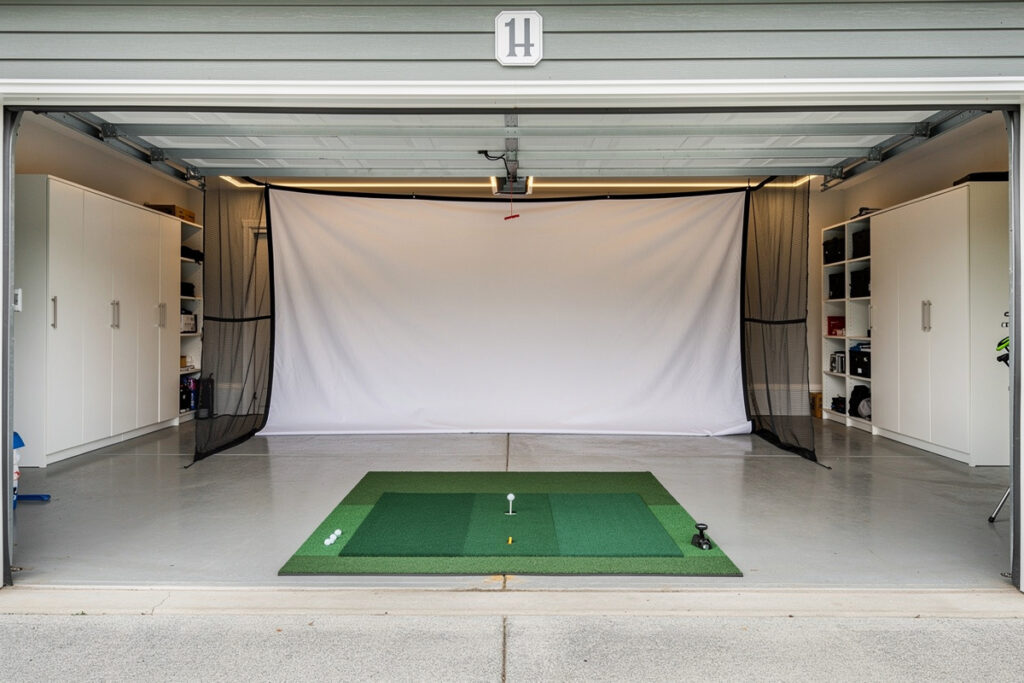
A garage can make an excellent golf simulator room, but the listed ceiling height almost always lies to you: the garage-door track and opener motor hang down into your swing path, often stealing six inches to a foot of usable clearance. Add cold-weather screen behavior and a sloped slab, and the garage rewards planning more than any other space.
I keep coming back to the garage in conversations because it is the most common starting point and the most misunderstood. It genuinely wins on width and depth — two car bays give you room most basements envy — but it loses on the things people forget to check until the build is half done. This is the honest reality check: what actually goes wrong in a garage sim, and how to get ahead of each problem before you spend money.
The Garage-Door Track Problem
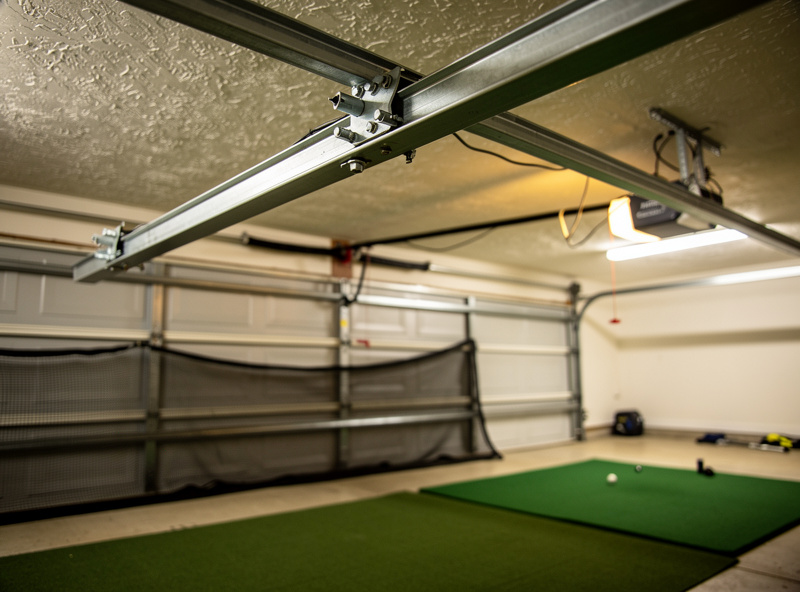
The single biggest garage surprise is that your usable ceiling is not the height to the ceiling — it is the height to the lowest point of the door track, the opener rail, and the raised door panels when open. A garage that measures 9 feet to the drywall can offer barely 8 feet of real swing clearance once the door hardware is in the picture. Measure to the door track, not the ceiling.
You have three honest options. Leave the door closed and swing in the clear space in front of it, which usually preserves the most height. Replace a standard track with a low-headroom or side-mount opener to reclaim the rail space. Or accept the reduced clearance and plan an iron-and-wedge room rather than a full-driver one. Whichever you choose, run the swing-arc test from the ceiling height guide against the door hardware in its actual position — open or closed, whichever you will use.
Cold, Heat, and Condensation
An unconditioned garage is a hostile environment for both the gear and the golfer. Cold stiffens an impact screen and changes how it absorbs a strike, a cold golfer swings worse and risks pulling something, and the bigger danger is condensation — warm, humid air meeting cold surfaces can fog a projector lens, dew a launch monitor, and dampen a hitting mat. In a Swedish winter this is not a minor footnote; it decides whether the room gets used from November to March. Condensation damage is also one of the inspection items worth checking on a used unit — the used launch monitor buying guide walks through what to ask and test before handing over money.
The fix is to treat conditioning as part of the build budget, not an afterthought. Insulate what you can, seal the obvious air leaks around the door, and add controllable heat. A garage space heater sized to the room takes the edge off cold sessions and, more importantly, keeps surface temperatures above the dew point so your electronics stay dry. Let the room warm and stabilize before a session rather than firing everything up in a freezing space and watching the projector lens fog over.
The Slab Is Not Flat
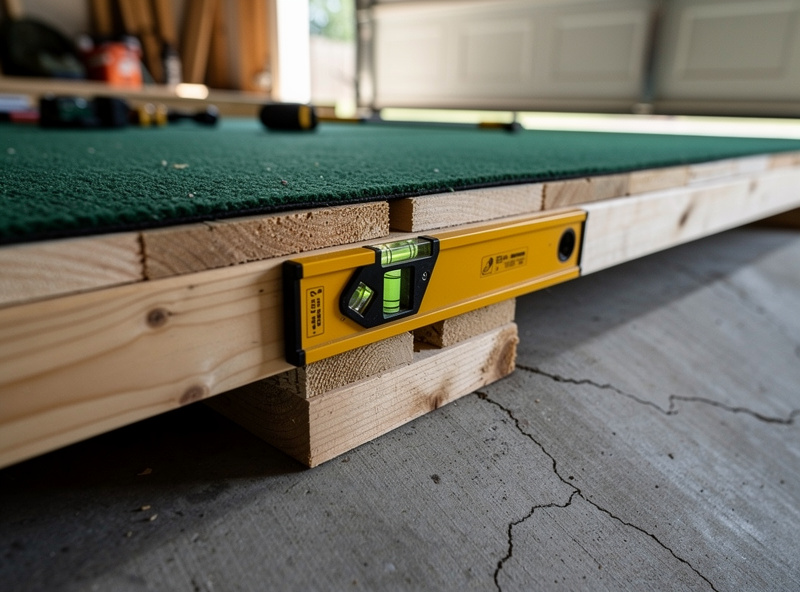
Almost every garage slab is intentionally sloped toward the door for drainage, typically a gentle but real pitch over the depth of the bay. That slope quietly tilts your stance and skews your low point and your launch data if you set a hitting mat directly on it. The fix is to level the hitting area so your stance is square and the ball sits at a true height.
You can shim and build a small level platform under the mat, or use a leveling base designed for the purpose. Either way, check the result with a long level across the stance, because a slope you cannot feel walking around is one your golf swing absolutely notices. Leveling the hitting zone is the garage equivalent of the floor build-up tax I flag in the master room requirements guide — except here you are adding height deliberately, which means re-checking your ceiling clearance afterward.
Garage Trade-Offs at a Glance
The garage’s strengths and weaknesses are predictable, which is exactly why it rewards planning. Here is how it stacks up against the other common spaces on the dimensions that matter.
| Factor | Garage | Basement | Spare Room |
|---|---|---|---|
| Width and depth | Usually generous | Often good | Tightest |
| Ceiling clearance | Cut by door track | Cut by ducts/beams | Usually full |
| Temperature control | Hardest | Easiest | Easy |
| Floor flatness | Sloped slab | Usually flat | Flat |
| Noise to household | Best isolated | Moderate | Worst |
Width and Depth: Where the Garage Wins
For all its quirks, the garage usually hands you the two dimensions that are hardest to find elsewhere. A double bay commonly offers 18 to 20 feet of width and similar depth, which means you rarely fight the centered-swing and standback constraints that pinch a spare room. That generous footprint is the garage’s real advantage and the reason so many serious home setups end up there.
Use the surplus wisely. The extra width lets you center the hitting position for both-handed play without the offset compromises a narrow room forces, and the depth gives you a comfortable screen offset plus standback for a behind-ball monitor — the room depth guide breaks the full front-to-back stack into three named zones so you can budget each slice. I cover how to allocate that width in the room width guide — the garage is often the one space where you get to build to the comfortable target instead of the bare minimum.
Making the Garage Build Work
Pull it together in order. First, measure usable ceiling to the door hardware and run your swing-arc test; that tells you whether this is a full-driver or iron-focused room. Second, level the hitting zone and re-confirm clearance after the platform raises your stance. Third, plan conditioning so the room stays warm and dry enough to use and protects the electronics. Only then lay out width and depth, which the garage usually grants generously.
Done in that sequence, a garage becomes the room many people wish they had started with: isolated from the household, big enough to swing freely, and yours to use at any hour. The quirks are real, but every one of them is a known problem with a known fix — which is exactly why the garage rewards the measure-first discipline more than any other space.
As an Amazon Associate I earn from qualifying purchases.
Frequently Asked Questions
Is a garage tall enough for a golf simulator?
It depends on the garage-door hardware. The track and opener rail hang into the ceiling space and often cut usable clearance to around 8 feet even in a 9-foot garage. Measure to the lowest point of the door track, not the ceiling, before deciding.
How do I deal with a sloped garage floor for a simulator?
Most garage slabs pitch toward the door for drainage, which tilts your stance and skews launch data. Build a small level platform or use a leveling base under the hitting mat, then check it with a long level so your stance sits square and true.
Will cold weather damage a golf simulator in a garage?
Cold itself stiffens the impact screen, but the real risk is condensation fogging the projector and dewing the monitor. Insulate, seal air leaks, and add controllable heat so surfaces stay above the dew point and the room is usable in winter.
Can I keep the garage door closed and still use the simulator?
Yes, and it often preserves the most ceiling clearance because the open door panels and raised track no longer intrude. Swing in the clear space in front of the closed door, and run your swing-arc test in that exact position before building.
Is a garage better than a basement for a golf simulator?
A garage usually wins on width, depth, and noise isolation but loses on ceiling clearance and temperature control. A basement is easier to condition but often fights low ceilings and ducts. The best space is whichever one’s limiting dimension you can live with.
Related Guides
- Golf Simulator Room Requirements: The Complete Guide
- Golf Simulator Ceiling Height: How Much You Really Need
- Room Width for a Golf Simulator
More from This Cluster
- “Golf Simulator Room Depth: The Three Zones Explained”
- “Golf Simulator Screen Distance: Safe and Sharp”
- “Low-Ceiling Golf Simulator Options That Actually Work”
- “Room Width for a Golf Simulator: Centered and Safe”
- “Golf Simulator Ceiling Height: How Much You Really Need”
- “Golf Simulator Room Requirements: The Complete Tape-Measure Guide”