Clean a golf impact screen with cool water and a soft brush only — never solvents, bleach, or a washing machine. Wash it when the white starts to grey, which with daily winter use is roughly monthly. Harsh cleaners strip the coating that keeps the weave projecting a sharp image, and a machine wash stretches the panel permanently out of square.
This is the cheapest performance upgrade in a sim, and the one people skip. In my own DIY golf simulator enclosure a clean screen looks noticeably brighter than a scuffed one, and I have killed exactly one screen by being too aggressive with it — so this guide is as much about what not to do as what to do.
Why Does a Dirty Impact Screen Matter?
A dirty impact screen scatters projected light unevenly, lowering contrast the same way a bright room does. Ball scuff, mat dust, and grime build a grey film over the strike zone that dulls the image right where you look most. A neglected screen quietly undoes the contrast you gained from blacking out the enclosure.
The film is gradual, so you do not notice it day to day — you notice it the moment you wash the screen and the picture jumps back to bright. The dirtiest part is the center, where most shots land and where the projected fairway sits, so the degradation hits the most visible area first. Keeping the screen clean is not cosmetic fussiness; it is keeping the display component of your sim working. A screen and a projector are a pair, and a grey screen wastes whatever the projector puts out — the same logic that makes blacking out the room worth the effort.
How Do You Wash a Golf Impact Screen?
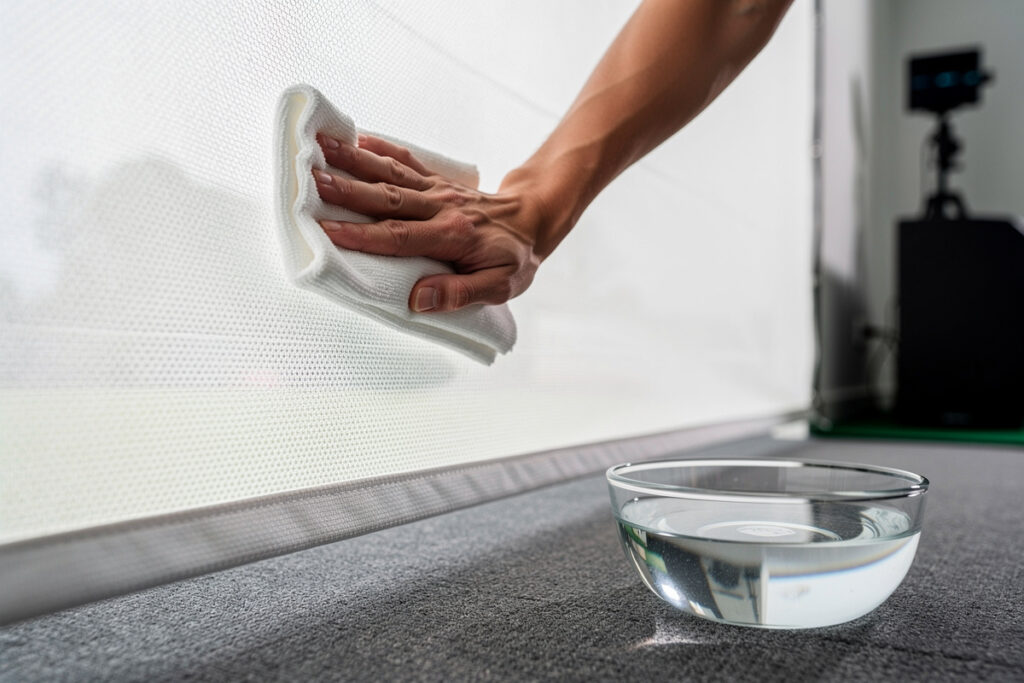
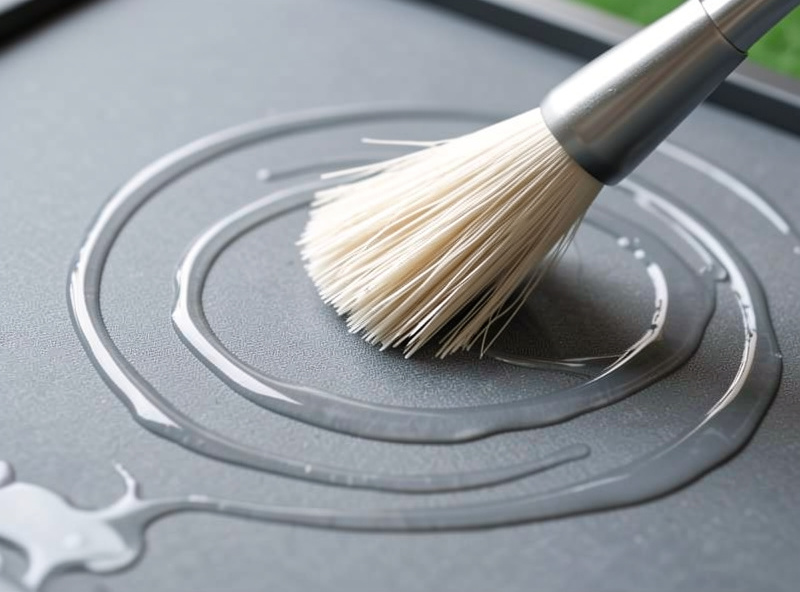
Wash the screen in place with cool water and a soft-bristle brush or microfiber cloth, working gently over the dirty areas, then let it air dry. Do not soak it, do not scrub hard, and do not use any cleaning chemical. Plain cool water lifts most ball scuff and dust; for stubborn marks, a tiny amount of mild dish soap well diluted is the strongest thing that should ever touch it.
I wash mine on the frame rather than taking it down, because re-tensioning a screen is a job I would rather not repeat monthly. A soft brush in small circles over the greyed center, a wipe with a damp microfiber, and an hour to air dry is the whole routine. The only gear it takes is a soft-bristle brush and a pack of microfiber cloths kept just for the screen. As an Amazon Associate I earn from qualifying purchases. The mistake to avoid is pressure — grinding at a mark drives scuff deeper into the weave and can fray the fibers. Patience and a soft touch beat force every time on woven polyester.
What Destroys an Impact Screen?
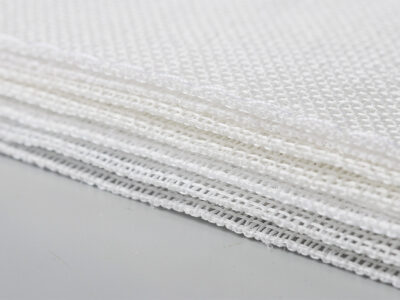
The screen-killers are solvents, bleach, abrasive scrubbing, machine washing, and hot water. Each attacks the coated woven surface that gives a clean projection: solvents and bleach break down the coating, abrasion frays the weave, a machine stretches the panel out of square, and heat can distort the fibers. The screen looks tough because it stops golf balls, but its projecting surface is delicate.
I learned the machine-wash lesson on a cheap panel I thought I could refresh quickly — it came out stretched and never hung flat again, and the image was wavy from then on. That panel went in the bin. Treat the screen like a projection surface that happens to take impacts, not like a tarp you can hose down. If a mark will not come out with cool water and gentle work, it is better to live with it than to reach for something stronger and ruin the whole panel.
How Do You Keep the Screen Cleaner Longer?
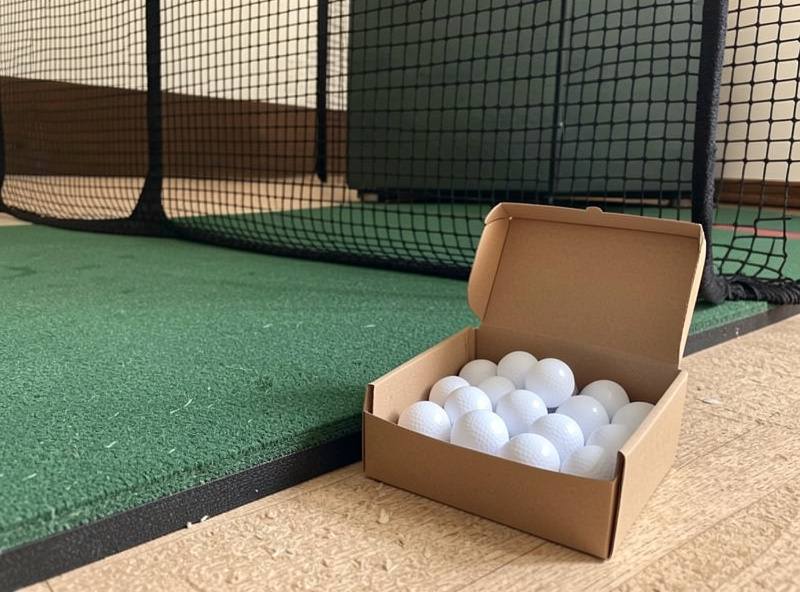
The single best habit is hitting clean indoor balls instead of grass-stained outdoor ones, because most screen marks come from dirty balls. Keep a dedicated set of clean balls for the sim, knock the worst dust off your mat regularly, and the screen stays bright far longer between washes. Prevention beats cleaning because every wash is also gentle wear.
I keep a separate box of clean balls just for indoor use, and the difference in how fast the screen greys is obvious. Range balls and balls that have been outside carry grass, dirt, and grit that transfer straight to the weave on impact. A little mat hygiene helps too — dust kicked up from a filthy mat settles on the lower screen. None of this is fussy; it is the same logic as keeping clean balls for any indoor surface. Cleaner inputs mean fewer washes, and fewer washes mean a longer screen life.
What About the Frame and Blackout Fabric?
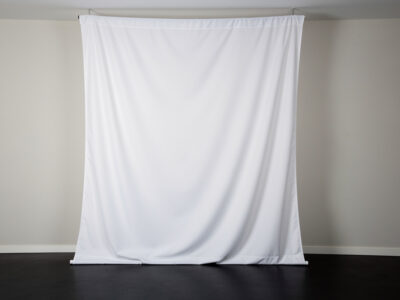
The frame and blackout fabric need almost no cleaning, just an occasional check that nothing has loosened or sagged. Wipe dust off the conduit or lumber when you clean the screen, confirm the tension hardware is still tight, and make sure the blackout cloth has not drooped into the projection cone. The screen is the only part that rewards a regular routine.
On my build I check the frame set screws and the bungee tension at the same time I wash the screen, because a settled screen and a loosened fitting show up together. If the blackout fabric has sagged it greys the image as surely as a dirty screen does, so a quick tug to re-flatten it is part of the same maintenance pass. The frame you built in the EMT conduit build is basically maintenance-free; it is the soft components — screen and fabric — that need the attention.
How Do You Dry a Screen Without Distorting It?
Let the screen air dry in place on its frame at room temperature — never with a heat gun, hair dryer, or by leaving it tensioned unevenly while wet. Even, gentle air drying keeps the weave flat and square. Heat or uneven tension while damp is how a screen dries with a permanent ripple.
Because I wash mine on the frame, drying takes care of itself: it stays evenly tensioned and dries flat in an hour or two. If you do take a screen down to wash it, lay it flat or re-hang it with even tension before it dries, not bunched in a heap. Damp polyester takes a set, so however it dries is how it will hang. Cool, even, and patient is the rule for drying, exactly as it is for washing — the whole care routine comes down to being gentle with a surface that is more delicate than it looks.
One practical tip: do not play on a damp screen. A wet panel is softer and a ball strike can stretch it while the fibers are relaxed, so give it the full air-dry before your next session. I wash on a day I am not planning to hit, usually in the morning so it is dry by evening. Rushing back into a round on a half-dry screen is a small way to undo a careful wash.
Spot-Cleaning vs a Full Wash: Which When?
Spot-clean a single ball mark or smudge as it appears with a damp microfiber; do a full gentle wash only when the whole center has greyed. Catching individual marks early keeps the overall film from building and stretches the time between full washes. Reserve the full wash for when contrast has visibly dropped across the strike zone.
I keep a microfiber within reach of the mat and wipe an obvious mark right after a session rather than letting it set. Fresh scuff lifts far easier than scuff that has been ground in over weeks of subsequent strikes. The full wash is a once-a-month event at most for me; the quick spot-wipe is near-daily and takes seconds. Treating cleaning as little-and-often rather than rare-and-aggressive is gentler on the weave and keeps the image consistently bright instead of cycling between dingy and freshly washed.
Frequently Asked Questions
How do you clean a golf impact screen?
Wash it in place with cool water and a soft brush or microfiber cloth, working gently over dirty areas, then let it air dry. Avoid solvents, bleach, hot water, and machine washing. For stubborn marks, a tiny amount of well-diluted mild dish soap is the strongest thing to use.
How often should I clean my impact screen?
Clean it when the white starts to grey, which with daily use is roughly monthly. Lighter use means longer between washes. Cleaning the center strike zone, where most marks build, restores contrast and brightness to the image.
Can I put an impact screen in the washing machine?
No. A washing machine stretches the panel permanently out of square, and the screen will never hang flat again. Wash it gently by hand in place with cool water instead. Machine washing is one of the surest ways to ruin a screen.
What cleaners damage a golf impact screen?
Solvents and bleach break down the coating, abrasive scrubbing frays the weave, hot water distorts the fibers, and machine washing stretches the panel. Cool water and a soft brush are all a screen needs; anything stronger risks ruining it.
How do I stop my impact screen getting dirty so fast?
Hit clean indoor balls instead of grass-stained outdoor ones, since most marks come from dirty balls. Keep a dedicated set of clean balls for the sim and keep your mat dust down. Cleaner inputs mean fewer washes and a longer screen life.