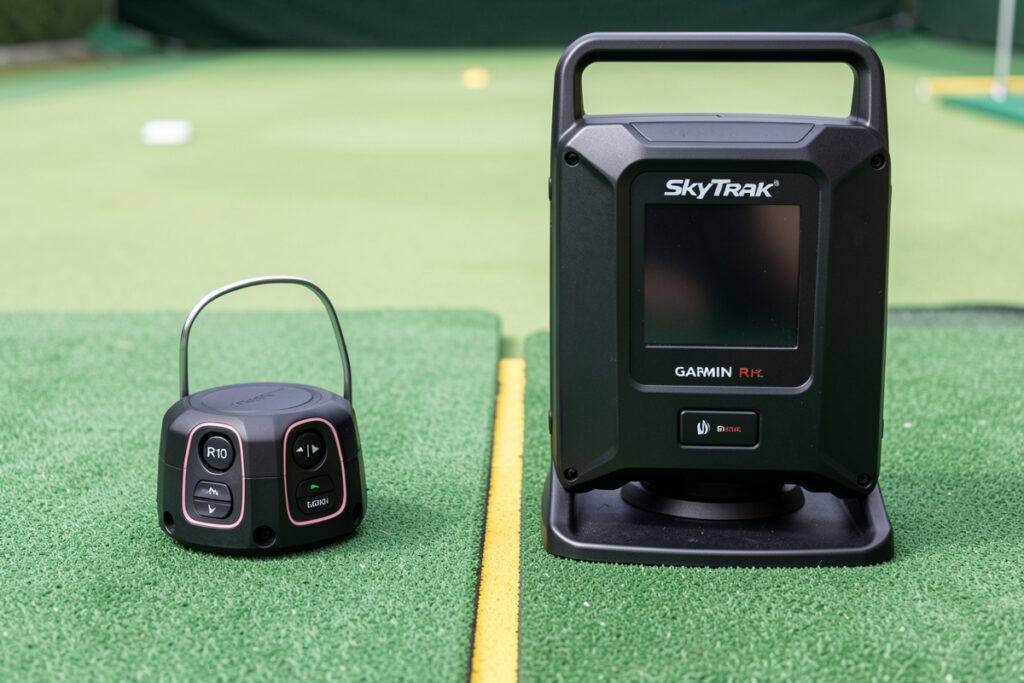
The jump from a Garmin Approach R10 to a SkyTrak+ is roughly a $2,400 step — about $600 to around $3,000 — and what it buys is measured data instead of inferred data. The R10 is a radar that estimates spin and launch; the SkyTrak+ is photometric and photographs the ball at impact. Same session, both monitors, the SkyTrak+ holds steady exactly where the R10 starts to guess.
I own and use both, and I learned the difference the only honest way: by hitting the same swings through both units in the same session and watching where the numbers parted ways. This is not a spec-sheet comparison pulled from marketing pages — it is what the price jump actually changed in my room, and who should pay it versus who should keep the R10 and spend the money elsewhere.
How Each One Measures the Ball
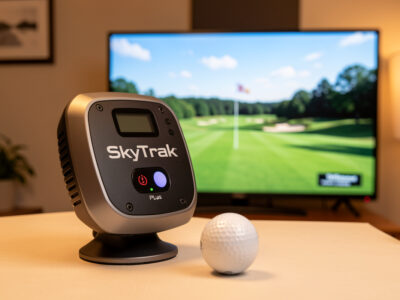
The R10 is a Doppler radar: it tracks the ball and club through the air and infers spin, launch, and the rest from that flight. The SkyTrak+ is photometric, using high-speed cameras beside the ball to photograph the strike and measure launch and spin directly, with an added radar component for club data. That difference — inferred versus measured — is the whole story of the price jump, and everything else follows from it.
Radar wants ball flight to read, which is why it is happiest outdoors with a full shot to track. Indoors, where the ball travels a few feet before the screen, the radar has less to work with and leans harder on estimation. The photometric unit does not care that the flight is short, because it measured everything it needs in the first inches off the face. I unpack the general principle in radar vs photometric; this guide is the specific head-to-head.
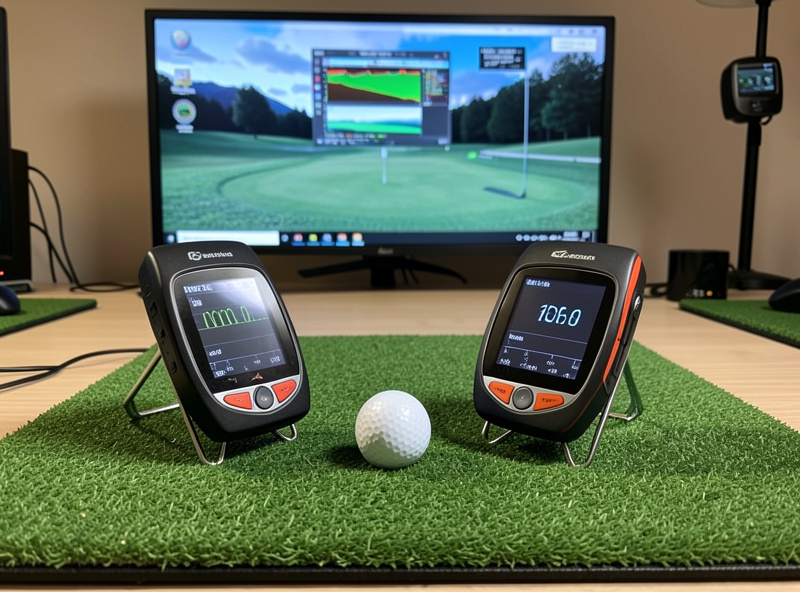
Where the Numbers Diverge, Same Session
Hitting both at once, the agreement on center strikes is closer than you would expect — on a flushed shot, ball speed and carry track each other well. The divergence shows up on two fronts: mishits and spin. On a toe or heel strike, the R10’s spin and side numbers wander while the SkyTrak+ stays planted, because the camera measured the actual ball rather than inferring from a flight the radar half-saw.
The second divergence is indoors specifically. With only a few feet of flight before the screen, the R10’s spin readings get noisier and more variable shot to shot, while the SkyTrak+ is unaffected because its measurement happens at impact. This is the single most important thing to understand: the R10 is at its weakest in exactly the environment a home sim creates. I documented those edges in the honest limits of the R10, and they are real, not knocks on a genuinely good-value device.
The Head-to-Head
Here is how the two compare across the things that actually matter for a home sim build. Prices are approximate and shift, but the relationships hold.
| Factor | Garmin Approach R10 | SkyTrak+ |
|---|---|---|
| Measurement type | Doppler radar (infers) | Photometric + radar (measures) |
| Approx. price | ~$600 | ~$3,000 |
| Indoor spin reliability | Variable on short flight | Stable, measured at impact |
| Mishit data | Wanders | Holds steady |
| Portability | Excellent, pocket-size | Larger, room-based |
| Best use | Range, travel, budget sim | Data-driven indoor practice |
The table makes the trade obvious: you are not buying a better version of the same thing, you are buying a different measurement method. The full build that the SkyTrak+ anchors is in the SkyTrak+ build guide, and where this monitor cost sits in the overall split is in the budget breakdown. As an Amazon Associate I earn from qualifying purchases. Both units anchor their tiers: the Garmin Approach R10 on the budget end and the SkyTrak+ at the photometric step.
Who Should Pay the Jump
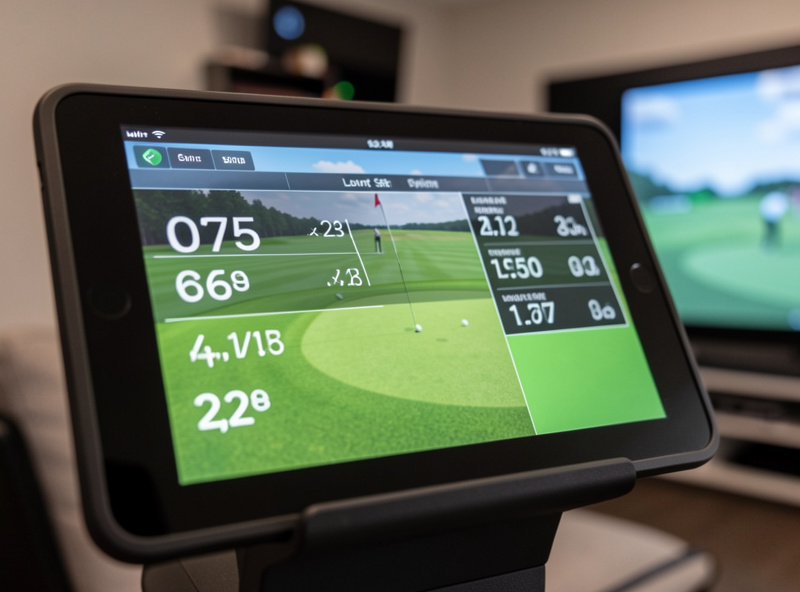
Pay the $2,400 if you act on your data — if you will actually practice a spin number or a launch angle and need to trust it shot to shot. For a golfer doing structured indoor practice through a long winter, measured spin is the difference between training and guessing, and that is worth the money. The SkyTrak+ is the monitor you keep for years once you have crossed into data-driven practice.
Do not pay it if the R10 still has lessons left, if your room cannot make your full swing, or if your mat is flattering your strikes — in those cases the money buys more practice elsewhere first. That whole decision is the subject of upgrading from a starter monitor, and the overall buying order is in the mid-range build hub. The R10 is not the thing holding most golfers back; the room and the mat usually are.
Keep the R10 Either Way
Even if you upgrade, the R10 is worth keeping. It does the portable, outdoor, and travel work the SkyTrak+ is not built for — it slips in a bag and reads a full outdoor flight, which is the radar’s natural home. I kept mine as a range and travel unit precisely because it shines outdoors, where the photometric room-based setup cannot follow. Owning both means each tool does what it is best at, rather than asking one device to be everything.
If you are still deciding between budget radars before any of this, the R10 versus MLM2PRO comparison covers the camera-or-radar choice at the entry tier, and which budget data to trust keeps your expectations honest at any price.
What the Jump Does Not Buy
It is worth being clear about what the $2,400 does not fix, because the SkyTrak+ is sometimes oversold as a cure-all. It does not buy you a better swing — it measures the one you have more precisely, which is only useful if you act on what it shows. It does not buy a better picture; that is the screen and projector’s job. And it does not rescue a room that cannot make your full swing, because it can only measure the motion the space allows.
I have watched people expect a photometric upgrade to transform a setup whose real bottleneck was a cheap mat or a clipped driver finish, and the new monitor simply measured the same compromised swing with more decimal places. The jump buys trust in your numbers, nothing more and nothing less. If your numbers are not the thing limiting your practice, the money belongs elsewhere in the build first — a point I keep returning to because it is the most common and most expensive misread in this whole hobby.
Frequently Asked Questions
How much more is a SkyTrak+ than a Garmin R10?
About $2,400. The R10 runs roughly $600 and the SkyTrak+ around $3,000. The jump buys a different measurement method, not a better version of the same one: the SkyTrak+ measures the ball photometrically while the R10 infers flight from radar.
Is the SkyTrak+ more accurate than the R10 indoors?
For spin and mishits indoors, yes. The R10 is a radar that needs ball flight to read, so its spin numbers get variable on the short flights a home sim creates. The SkyTrak+ measures at impact with cameras, so it stays stable regardless of how far the ball travels.
Do the R10 and SkyTrak+ agree on good shots?
On flushed center strikes they track each other closely on ball speed and carry. The gap opens on mishits and on spin, where the R10 wanders and the SkyTrak+ holds steady because it measured the actual ball instead of inferring from a partial flight.
Should I sell my R10 if I buy a SkyTrak+?
No. Keep the R10 for range, travel, and outdoor use, where its portability and full-flight radar reading are genuine strengths the room-based SkyTrak+ cannot match. Owning both lets each tool do what it does best instead of compromising on one.
Is the R10 good enough for a home sim?
Yes, for many golfers. The R10 in a proper enclosure with a good mat practices well for direction, gapping, and tempo. The upgrade is only worth it when you genuinely act on spin and launch data and need to trust those numbers shot to shot.