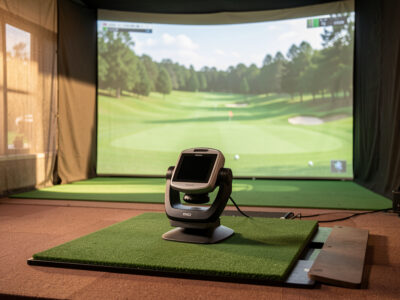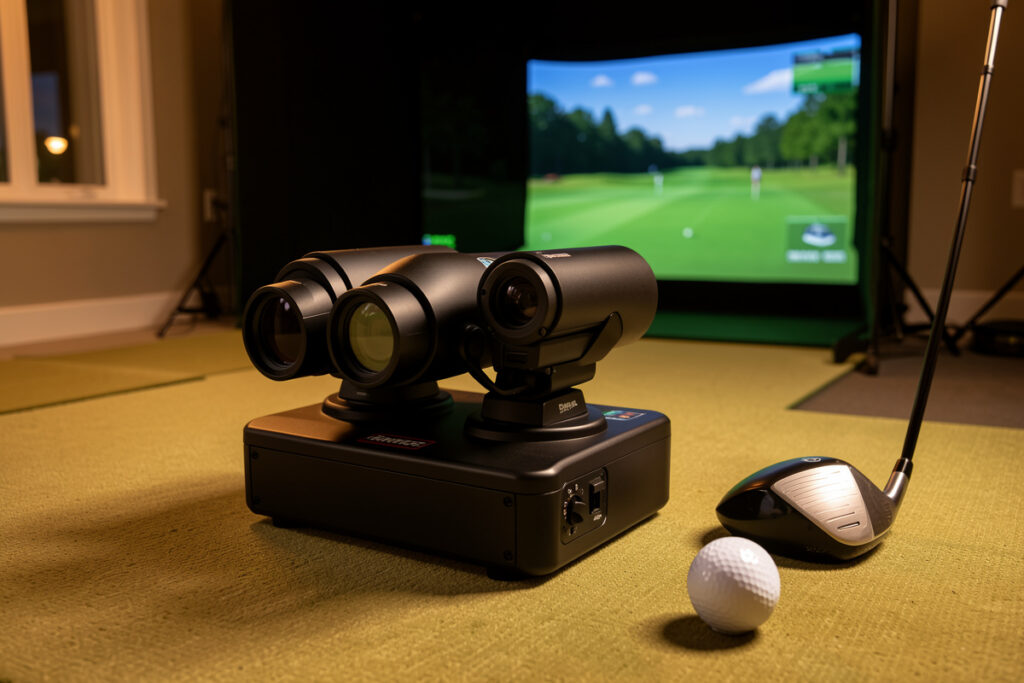
Trackman and the Foresight GCQuad are the two reference launch monitors of the game, and they reach their accuracy from opposite directions: Trackman is dual radar that tracks the ball downrange, the GCQuad is a four-camera unit that reads the clubhead and ball at impact — and both sit in the $12,000-to-$25,000 reference tier, roughly ten times the price of a SkyTrak+. In the same-session work I have logged, they agree on ball flight and split on where they are each strongest — Trackman outdoors and downrange, the GCQuad on indoor club delivery.
If you are weighing these two for a home build, the deciding question is almost never “which is more accurate.” Both are accurate enough that the difference is academic for a home golfer. The real question is which one fits your room, your power source, and the way you actually practice. I have run both against the same swings, and here is the honest split.
The Core Difference: Radar Versus Camera
Trackman watches the ball through its flight; the GCQuad photographs the impact. That single architectural choice drives every practical difference between them. Trackman’s dual radar measures the ball travelling downrange and computes club delivery from that flight, which is why it is unbeatable outdoors and the standard in tour coaching. The GCQuad’s four high-speed cameras capture the clubhead and ball in the impact zone directly, no marked ball required, which is why fitters trust it indoors in a tight bay.
Neither is “better.” They are optimised for different environments, and your room decides which optimisation you actually benefit from. I cover the underlying technology in depth in radar vs camera launch monitor explained — read it if you want the physics before the verdict.
Indoors, the Room Picks the Winner
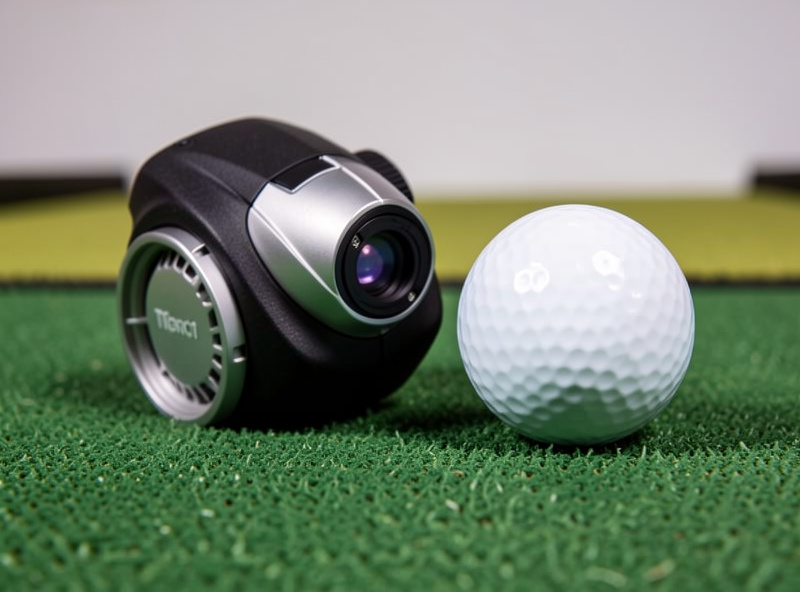
In a typical home room the GCQuad has the easier job. Because it reads the impact zone rather than ball flight, it needs very little depth behind the ball — it works happily in a bay where the ball meets the screen a few feet after launch. Trackman indoors needs to see enough ball flight to compute its numbers, so it wants depth and a specific placement, and a short room starves it of the very data it is built to measure.
I have set both up in my space, and the GCQuad simply asked less of the room. If your build is depth-limited — and most home builds are — that is a decisive practical edge. Before you commit to either, measure honestly against my room depth guide; the radar unit’s depth appetite is the most common reason a premium Trackman underperforms indoors.
Club Data and Spin: Where They Diverge
Both units give you the full club picture — clubhead speed, attack angle, club path, face angle, dynamic loft — but they arrive at spin differently, and spin is where same-session sessions show the gap. The GCQuad reads spin photometrically at impact; Trackman measures it off the flying ball. On clean strikes they are close. On mishits and on very high-spin wedges, I have watched them part ways by a few hundred RPM, each confident in its own number.
For a home golfer this matters less than the forums suggest. What you want is a consistent, repeatable number you can train against, and both deliver that within a session. The trap is comparing a spin reading from one unit against the other’s and treating the difference as error — it is method, not malfunction. My launch monitor data accuracy comparison goes metric by metric on what holds and what wanders.
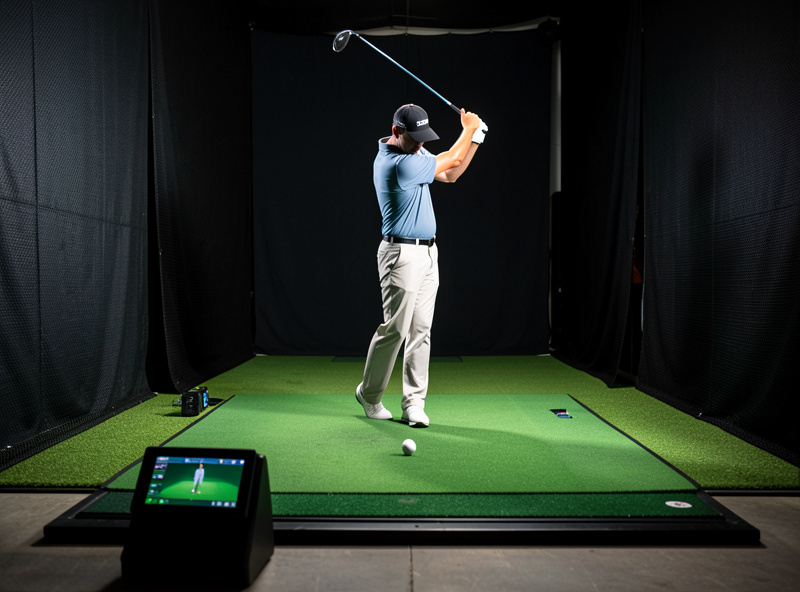
Trackman vs Foresight GCQuad: Side-by-Side
| Factor | Trackman | Foresight GCQuad |
|---|---|---|
| Measurement | Dual radar (Doppler) | Quadrascopic camera |
| Reads | Ball flight downrange | Impact zone, club + ball |
| Indoor depth need | High | Low |
| Outdoor use | Excellent | Good, but a camera unit |
| Marked ball | No | No |
| Best at | Full-flight, range, coaching | Indoor bays, club fitting |
| Price tier | Mid five figures | Five figures |
Software and the Sim Experience
Both integrate with serious simulation software, but their ecosystems differ. Trackman runs its own polished performance and course software; the GCQuad plays well with FSX and, through the right path, other sim platforms. If your goal is course play on a big screen rather than range numbers, check which courses and which software each unit unlocks before you buy — the monitor is only half the experience. My sim software guide walks through how the platforms differ, and I keep my own room on GSPro for the community course library.
So Which One Should You Buy?
For a home build in a normal room, the GCQuad is the more forgiving choice: it sips room depth, needs no marked ball, and delivers reference club data in a tight bay. Buy Trackman if you genuinely practise and coach outdoors, want the downrange flight model, and have the depth indoors to feed it. Neither is a mistake — they are simply tuned for different lives.
And here is the builder’s honesty: most golfers reading this do not need either. The jump from a $3,000 SkyTrak+ to a five-figure reference unit buys precision you will struggle to use unless you are fitting clubs or chasing tour-level mechanics. If the five figures are not happening, the SkyTrak+ is the realistic alternative and you can check its current price here. Start from the high-end launch monitor comparison hub to see where each unit sits, and read golf simulator vs standalone launch monitor if you are still deciding what you are really building.
As an Amazon Associate I earn from qualifying purchases.
Living With Each Day to Day
Beyond the data, these two units live differently in a room. The GCQuad is a floor box you place beside the ball and forget — quick to set up, quick to pack away, and it asks nothing of your ceiling. Trackman, depending on placement, wants a considered position to see flight, and outdoors it wants a clear sightline downrange. Neither is fragile, but both are precision instruments you treat with care; I keep mine in padded cases and never leave a unit in a freezing Swedish garage overnight, because cold and condensation are not kind to cameras or electronics.
Battery life, software updates and the speed of getting from “switch on” to “first shot” all favour a settled, permanent install. If your sim room is a shared space you tear down between sessions, the floor-unit simplicity of the GCQuad is a real quality-of-life advantage that the spec sheets never mention. If your room is dedicated and you mostly hit outdoors anyway, Trackman’s setup overhead matters less.
If Neither Fits Your Budget
Most people who research these two end up not buying either, and that is the right call more often than not. The honest step down is the camera tier just below the GCQuad: a Bushnell Launch Pro runs the same Foresight engine for less, and a SkyTrak+ gives you trustworthy ball data at a fraction of the price. You give up some measured club precision, but unless you are fitting clubs or chasing tour mechanics, you will not miss it in a winter of practice. I lay out that whole ladder in the high-end launch monitor comparison, and the accuracy comparison shows exactly which numbers you keep and which you trade as you step down. Buy the reference units only if you genuinely need reference data — for everyone else, the money is better spent making the room around the monitor honest.
Frequently Asked Questions
Is Trackman or the Foresight GCQuad more accurate?
Both are reference-grade and accurate enough that the difference rarely matters for a home golfer. Trackman is strongest outdoors and at full-flight downrange data; the GCQuad is strongest indoors and at impact-zone club delivery. The better unit is the one that fits your room and how you practise.
Which is better for a home golf simulator?
For most home rooms the GCQuad is the more forgiving choice because it needs very little depth behind the ball and reads club data directly in a tight bay. Trackman indoors needs depth to see ball flight, so a short room can starve it of the data it is built to measure.
Do either need a marked or special golf ball?
No. Both the Trackman and the Foresight GCQuad read standard golf balls without dots or stickers. That is one reason they sit above many cheaper camera units, which often need a marked ball to deliver their best spin and club numbers.
Can the GCQuad be used outdoors like Trackman?
Yes, the GCQuad works outdoors, but it remains an impact-zone camera unit rather than a downrange tracker. Trackman’s radar is purpose-built for the open range and full ball flight, which is why coaches favour it outdoors. For indoor bays the GCQuad’s strengths come forward.
Is the price gap between them worth it for a home user?
Rarely. Both are five-figure tools aimed at fitters, coaches and serious players. For most home golfers the jump from a $3,000 SkyTrak+ class unit to either reference monitor buys precision you will struggle to use. Spend the difference on room depth, a good mat and a proper screen instead.